


The skies, with us
Charter Flights For Large Groups: Operational And Logistical Advantages For Events And Corporate Travel
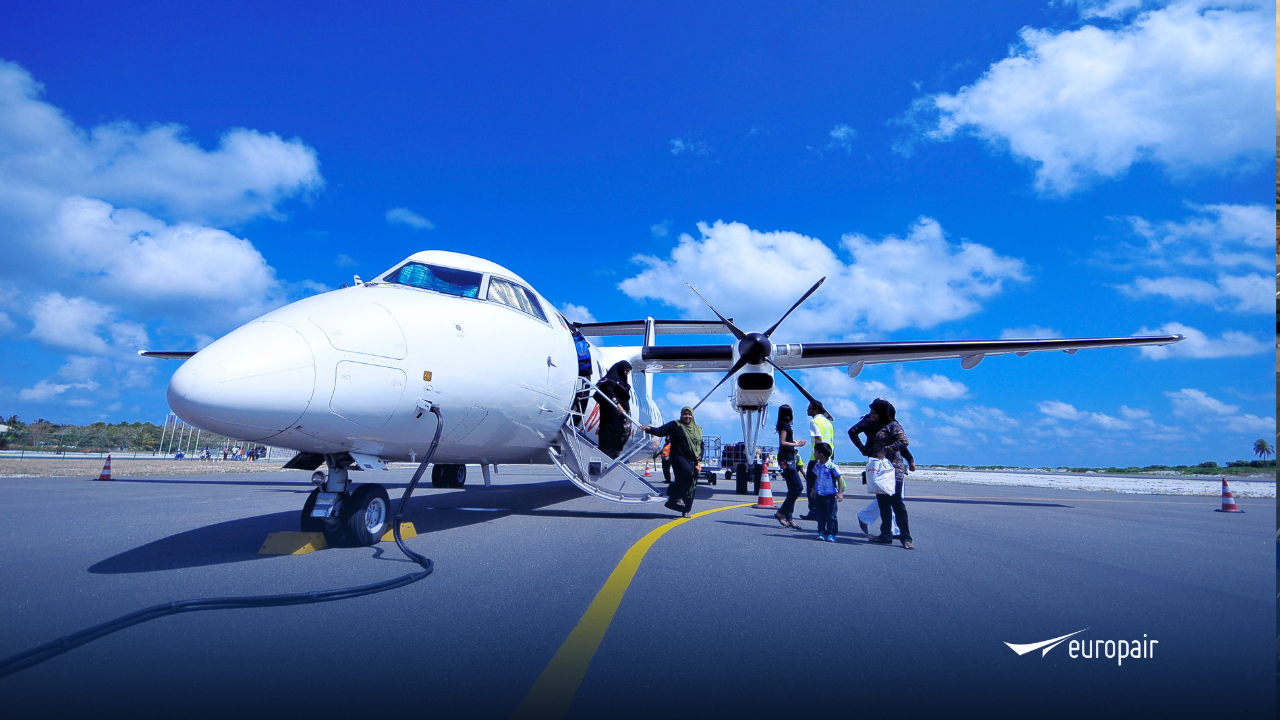
Transporting large groups (MICE agencies, corporate conventions, sports teams, orchestras, or cultural tours) represents a high-complexity strategic challenge. Regular commercial aviation imposes rigid seat limits per flight, strict scheduling, passenger dispersion across multiple routes, and a high risk of cancellations that can jeopardize event logistics.
Faced with these constraints, charter flights for large groups offer a fully tailored solution. This guide analyzes key factors making dedicated aircraft chartering the most efficient resource to ensure cohesion, punctuality, and operational success for large-scale travel.
1. Complete Alignment with Event Schedules and Agendas
In organizing conventions, sales summits, or incentive trips, group time is the critical factor. Fitting hundreds of attendees into fixed commercial airline schedules creates unnecessary downtime, extra hotel nights, and lost productivity.
With a dedicated charter flight, the itinerary is designed around the corporate schedule. The aircraft departs at the exact time requested by the client, and if a convention or award ceremony runs over, the flight waits. This flexibility eliminates the stress of commercial boarding and ensures the delegation arrives together and on time for every commitment.
2. Choosing the Right Aircraft Based on Group Size
The available charter fleet spans from regional aircraft carrying 30 to 50 passengers to large single-aisle or wide-body commercial airliners with capacities for 180, 300, or over 400 passengers.
This diversity optimizes seat costs by matching the aircraft type to the exact delegation size:
-
Regional aircraft (Turboprop / Regional Jets): Ideal for medium-sized teams traveling to secondary airports with shorter runways.
-
Medium-range commercial aircraft (Short / Medium Range): Standard choice for groups of 100 to 200 passengers on European routes.
-
High-capacity and wide-body aircraft (Long Range): Designed for transcontinental events or large-scale international conventions.
3. Personalizing the Experience and Brand Image
For corporate events or incentive trips, the travel experience begins at the terminal. A charter flight transforms the journey into a branding and corporate communication tool.
Onboard customization options include:
-
Visual branding: Custom seat headrests featuring company logos, cabin lighting adjusted to corporate colors, and welcome screens.
-
Tailored catering: Menus adapted to specific dietary requirements, group preferences, or event culinary themes.
-
Customized flight announcements: Crew messages tailored to the group or live executive addresses over the PA system.
4. Operating at Alternative Airports and Proximity to Destination
Commercial airlines concentrate operations at major international hubs, often forcing groups into long road transfers from the primary airport to the final event venue.
Charter flights access a much broader network of regional and secondary airports. Operating at airfields closer to the final destination drastically reduces bus transfer times, simplifies ground logistics, and avoids congestion at major commercial terminals.
5. Efficient Management of Special Luggage and Cargo
Transporting specific groups involves baggage requirements commercial aviation cannot reliably accommodate. Sports delegations with bulky equipment, orchestras with delicate instruments, or events moving audiovisual gear require guaranteed cargo capacity.
On a charter flight, the aircraft cargo capacity is reserved exclusively for the group, ensuring all baggage travels on the same flight and eliminating the risk of lost or scattered critical gear.
6. Streamlined Boarding and Dedicated Terminals
Processing 200 or 300 people through security and boarding gates at a crowded commercial terminal creates delays and group dispersion.
Depending on the departure airport and group size, charter operations allow the use of dedicated terminals, exclusive check-in desks, or private security lanes. This speeds up processing, keeps the group together, and cuts pre-departure waiting time in half.
7. Unified Logistics and Centralized Billing
Coordinating dozens of individual commercial airline tickets involves managing multiple fares, scattered cancellation policies, and a heavy administrative burden for travel agencies or corporate travel departments.
Chartering a flight simplifies management through a single contract, centralized billing, and a single point of contact. A specialized broker like Europair handles end-to-end operational coordination: managing permits, liaising with the airline, supervising airport handling, and tracking the flight in real time.
Conclusion: A Strategic Asset for Event Management
Charter flights for large groups are no longer a last resort but a high-value logistical tool. Ensuring a delegation travels together, on its own schedule, with maximum personalization is the safest way to protect the financial and reputational investment of any major event.
Europair manages group charter operations worldwide, offering independent advice, optimal aircraft selection, and comprehensive operational supervision from planning to touchdown.
Planning your group's next travel requirement? Contact our specialist team to receive a tailored proposal with no obligation.

-
Member of:
-