


The skies, with us
Ceuta And Mediterranean Crisis: Impact On Airspace
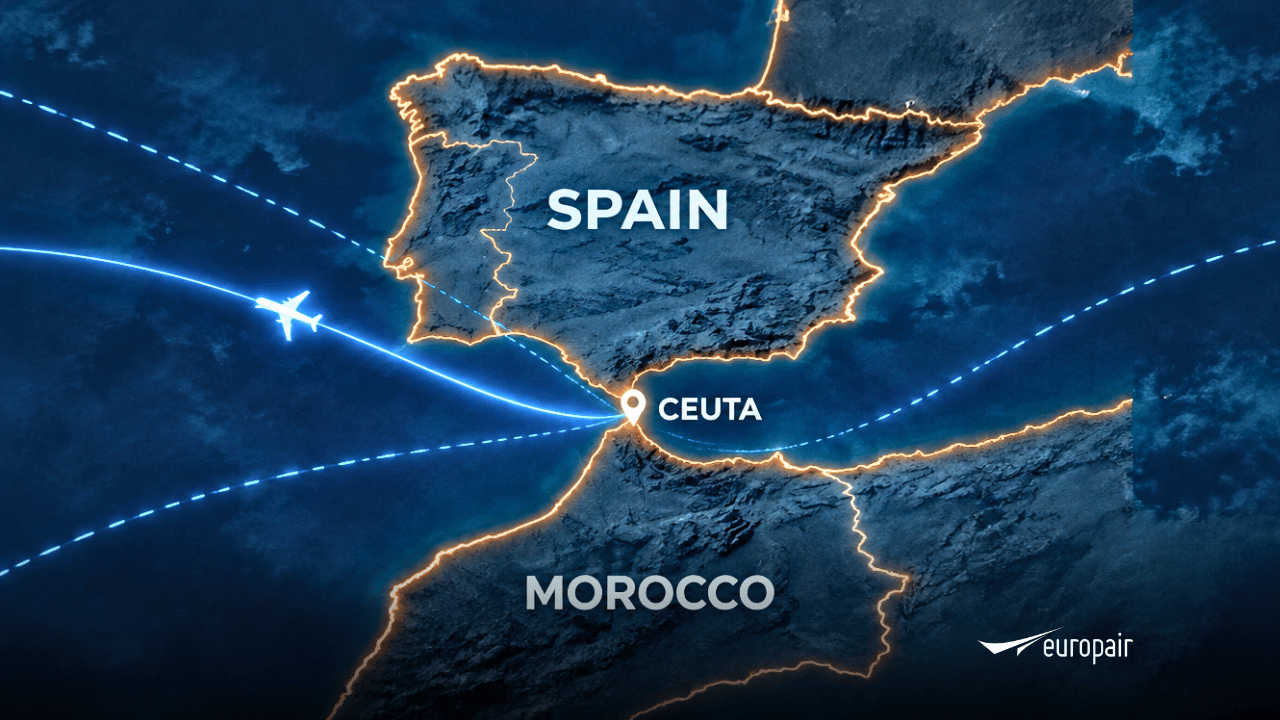
Any surge in geopolitical tension or border crisis in Ceuta and the western Mediterranean basin immediately impacts civil aviation. Increased flight restrictions, mandatory reroutings, and potential cancellations of conventional commercial routes drastically alter connectivity between Southern Europe and North Africa.
In these scenarios, on-demand aviation stops being a conventional corporate channel and becomes a strategic logistics and quick-response resource for companies, organizations, and institutions.
Repercussions On Airspace And The Airport Network
The deterioration of security or the closure of strategic airspace sectors in the Strait of Gibraltar and the Alboran Sea would force the reorganization of traffic across three main fronts:
-
Flight rerouting: Restrictions in specific airspace sectors require planning alternative routes over the Atlantic or the central Mediterranean, increasing flight times, fuel consumption, and operational workload for crews.
-
Congestion and operational priority at southern Spanish airports: Key infrastructures such as Málaga-Costa del Sol Airport (AGP), Sevilla Airport (SVQ), or Jerez Airport (XRY) adjust their operations to prioritize public service, defense, or institutional logistics flights, reducing available time slots (slots) for scheduled commercial aviation.
-
Restrictions in North Africa: Airports with a high volume of connections to Europe, such as Tangier Ibn Battouta Airport (TNG), Rabat-Salé Airport (RBA), or Casablanca Mohammed V Airport (CMN), may see their usual commercial connections suspended, complicating passenger departures through traditional channels.
From Scheduled Mobility To Emergency Logistics
When scheduled commercial airlines suspend operations or exhaust their capacity, chartering flights makes it possible to maintain operations and respond to critical transport needs.
1. Repatriation and evacuation of corporate personnel
Multinational companies with offices or projects in the region need to move work teams, engineers, or management personnel quickly. The ability to charter medium or large commercial aircraft (from 20 to 150 seats) guarantees the coordinated evacuation of entire workforces before total border lockdowns occur.
2. Air ambulance flights (Medevac) and special transport
The closure of land or sea routes increases the need for medicalized flights for urgent transport of patients or injured individuals, as well as cargo charters for priority delivery of medical supplies and technical equipment to restricted access areas.
Comparative Table Of Operational Responses
| Operational Variable | Scheduled Commercial Aviation | Contingency Charter |
| Route availability | Limited to fixed, cancelable itineraries | Adaptable to active alternative airports (e.g., AGP, SVQ, TNG) |
| Response capacity | Subject to massive airline rescheduling | Departures organized within hours |
| Group management | Scattered seats subject to individual cancellation | Complete workforce relocation in a single aircraft |
| Flight permits | Standard commercial processing | Priority processing of overflight and landing permits |
Logistics Coordination And Crisis Management With Europair
Responding to an operational crisis at origin or destination requires technical knowledge, direct access to the available global fleet, and the capability to manage bureaucratic complexity in record time. As an independent air broker with over 30 years of experience, Europair acts as a strategic link to locate aircraft anywhere in the world, coordinate takeoff and landing permits in complex environments, and ensure travel continuity when commercial aviation ceases operation.
Frequently Asked Questions (FAQs)
1. How does a crisis in Ceuta affect air traffic?
It causes immediate restrictions in the Strait of Gibraltar, forcing route diversions, longer flight times, and cancellations of regular commercial connections.
2. Which airports act as alternatives in the area?
In Spain, bases such as Málaga-Costa del Sol Airport (AGP), Sevilla Airport (SVQ), or Jerez Airport (XRY) are used, while in North Africa, key choices include Tangier Airport (TNG), Rabat Airport (RBA), and Casablanca Airport (CMN).
3. Can charter flights fly when airspace is restricted?
Yes. Being non-scheduled or emergency flights, specialized air brokers manage priority permits and exemption authorizations directly with civil aviation authorities.
4. What transport capacity does an evacuation flight offer?
Capacity can range from small executive aircraft to commercial airliners with over 150 seats to relocate entire corporate teams.

-
Member of:
-